What Is Pool Shock?
Pool shock is a concentrated chlorine or oxidizer treatment designed to quickly raise sanitizer levels and eliminate contaminants in swimming pool water.
When chlorine becomes “used up,” it forms chloramines — the compounds that cause strong odor, irritation, and cloudy water. Shocking your pool breaks apart those chloramines and restores clean, effective free chlorine.
If your water looks dull, smells strong, or struggles to stay clear, a proper shock treatment is often the fix.
When Should You Shock Your Pool?
Knowing when to shock your pool is just as important as knowing how.
After Heavy Pool Use
Large swim parties, frequent use, or high bather loads quickly reduce sanitizer levels.
After Rain or Wind Storms
Storms introduce debris, contaminants, and organic material that consume chlorine.
If Your Pool Water Turns Cloudy or Green
Cloudy water or early algae growth usually means chlorine demand has spiked.
As Weekly Preventative Maintenance
During peak swim season, many pool owners shock their pool once per week to maintain water clarity and prevent algae.
If you’ve ever wondered how often you should shock your pool in summer, the answer depends on temperature, usage, and stabilizer levels — but weekly is common in hot climates.
How Much Pool Shock Do You Need?
Shock dosage depends on pool size and water condition.
For routine maintenance:
1 pound per 10,000 gallons is common.
For algae treatment:
2 or more pounds per 10,000 gallons may be required.
If you’re calculating how much shock to use for a 15,000 gallon pool, multiply dosage accordingly and always confirm with water testing first.
Over-shocking can cause cloudy water, high calcium levels, or surface damage — so proper dosing matters.
Types of Pool Shock and When to Use Each
Not all shock treatments work the same way. Choosing the right type prevents water chemistry problems.
Calcium Hypochlorite (Cal-Hypo Shock)
Cal-hypo is powerful and fast-acting.
It’s often considered the best pool shock for algae removal and green pool recovery.
It adds calcium to the water, so monitor calcium hardness levels in plaster pools.
Dichlor Shock
Dichlor is stabilized chlorine, meaning it adds cyanuric acid (CYA).
It works well for routine shocking but may not be ideal if your stabilizer level is already high.
Non-Chlorine Shock
Non-chlorine shock oxidizes contaminants without significantly raising chlorine levels.
It’s commonly used for maintenance and allows swimmers to return sooner.
If you’re comparing cal hypo vs dichlor shock, the right answer depends on your current CYA and calcium levels.
How to Shock a Pool Properly (Step-by-Step)
Shocking a pool the right way prevents wasted chemicals and uneven results.
Step 1 – Test the Water
Check free chlorine, pH, CYA, and alkalinity.
Step 2 – Adjust pH
Ideal pH before shocking is 7.2–7.6.
Step 3 – Add Shock at Dusk
Sunlight burns off chlorine quickly. Evening application improves effectiveness.
Step 4 – Run the Pump
Circulate water for 8–24 hours to distribute treatment evenly.
Step 5 – Brush and Retest
Brushing helps eliminate algae and biofilm. Retest before swimming.
If you’re asking how to shock a pool properly, these steps prevent most common mistakes.
Why Is My Pool Still Cloudy After Shocking?
If your pool is still cloudy after shock treatment, the issue may not be chlorine.
Common causes include:
-
Dirty or undersized filter
-
High stabilizer (CYA) levels
-
Dead algae not vacuumed out
-
Poor circulation
-
Phosphates feeding algae
In many cases, filtration — not more shock — is the solution.
How to Choose the Best Pool Shock for Your Situation
The best pool shock depends on:
-
Pool size
-
Surface type (vinyl, fiberglass, plaster)
-
Current CYA level
-
Calcium hardness level
-
Whether algae is present
If you’re unsure which pool shock to use, choosing based on water test results prevents long-term chemistry imbalance.
Shop our full selection of pool shock treatments to match your pool’s needs.
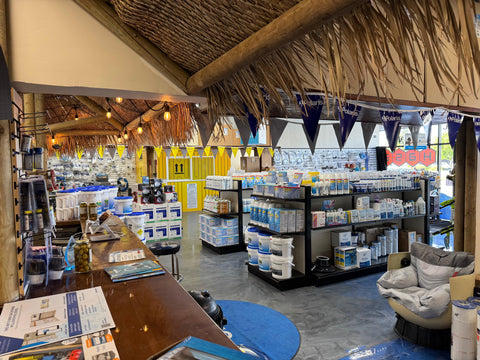
Why Buy Pool Shock from Benchmark Pool Supply?
Not all pool stores offer guidance — we do.
When you buy pool shock from Benchmark Pool Supply, you get:
-
Expert support from experienced pool professionals
-
Trusted, high-quality brands
-
Fast, dependable shipping
-
In-store pickup options
-
Help matching shock type to your water chemistry
We help you fix water problems correctly — not repeatedly.
Products That Help Maintain Proper Chlorine Levels
Once you understand when and why to shock your pool, the next step is using the right products to keep your water balanced and clear. Pool owners in Clovis and Fresno commonly use a combination of shock treatments, water testing kits, and supporting chemicals to maintain proper sanitizer levels.
Recommended products mentioned in this guide include:
Using the right combination of products helps eliminate contaminants, restore sanitizer levels, and keep pool water clear and safe for swimming.
Frequently Asked Questions About Pool ShockHow long after shocking a pool can you swim?
You can typically swim once free chlorine returns to 1–3 ppm, usually within 8–24 hours depending on dosage.
Is it better to shock a pool at night?
Yes. Shocking at night prevents UV degradation and improves chlorine efficiency.
Does pool shock kill algae?
Yes. Chlorine shock kills algae when used at proper dosage and combined with brushing and filtration.
Can you put too much shock in a pool?
Yes. Overuse can cause cloudy water, high calcium levels, and potential surface damage.
How long does it take for shock to clear a green pool?
Most green pools begin clearing within 24–48 hours when properly treated and filtered.