30 products


Pool Pumps – The Heart of Your Pool’s Circulation System
A pool pump keeps water moving through the filtration, heating, and sanitizing systems that help maintain a clean and comfortable swimming pool. Without proper circulation, debris can collect, chemicals may not distribute evenly, and water quality can become harder to manage.
Choosing the right pump involves more than matching the horsepower of your existing model. Pool size, plumbing diameter, filter flow limits, water features, elevation changes, and the amount of resistance within the system all affect which pump will perform efficiently.
At Benchmark Pool Supply, you can shop circulation and specialty pumps from trusted pool-equipment manufacturers, including Pentair®, Jandy®, and Polaris®. Our selection includes energy-efficient variable-speed pool pumps, traditional replacement pumps, and dedicated pool booster pumps for compatible pressure-side cleaners.
Why the Right Pool Pump Matters
- Effective Filtration: Moves pool water through the filter so dirt, debris, and suspended particles can be removed.
- Consistent Sanitizer Distribution: Helps circulate chlorine and other water-treatment products throughout the pool.
- Lower Energy Consumption: A properly programmed variable-speed pump can run at lower speeds for routine filtration and increase speed only when additional flow is needed.
- Improved Equipment Performance: Supplies the appropriate water flow to filters, heaters, chlorinators, and other connected equipment.
- Quieter Operation: Modern variable-speed pumps generally operate more quietly at lower RPM settings.
- Better System Control: Compatible pumps can be programmed for filtration, heating, cleaning, spa operation, and water features.
Types of Pool Pumps
Variable-Speed Pool Pumps
Variable-speed pumps allow the motor speed and water flow to be adjusted for different pool functions. Instead of operating at full speed all day, the pump can run more slowly during normal filtration and increase its speed when operating a heater, spa, cleaner, or water feature.
- Provides adjustable flow for different pool functions.
- Can significantly reduce electricity usage when correctly sized and programmed.
- Usually operates more quietly at lower speeds.
- Many models can communicate with compatible pool automation systems.
- Often the preferred choice when replacing an older single-speed circulation pump.
Single-Speed Pool Pumps
Single-speed pumps operate at one fixed motor speed whenever they are turned on. They have a simple design but offer less control over water flow and generally consume more electricity than a properly programmed variable-speed pump.
Availability and suitability can depend on the pump’s application and current energy-efficiency requirements. Before replacing an existing circulation pump with another single-speed model, verify that the replacement is permitted and appropriate for the pool system.
Dual-Speed Pool Pumps
Dual-speed pumps provide a low setting for routine circulation and a high setting for tasks requiring additional flow. They offer more flexibility than single-speed pumps, although variable-speed models provide considerably more control and programming options.
Pool Booster Pumps
A booster pump is a secondary pump used to supply additional water pressure to certain pressure-side pool cleaners. It does not replace the pool’s main circulation pump and should only be paired with a cleaner and plumbing configuration designed for booster-pump operation.
How to Choose the Correct Pool Pump
The largest pump is not automatically the best pump. An oversized pump can create excessive flow, increase noise, waste energy, and place unnecessary strain on plumbing and filtration equipment. An undersized pump may not provide enough flow for heating, spa jets, cleaners, or water features.
Important factors include:
- Pool and spa volume
- Plumbing pipe diameter and length
- Number of suction and return lines
- Filter type and maximum recommended flow rate
- Heater and sanitizer flow requirements
- Elevation changes and plumbing restrictions
- Attached spas, waterfalls, deck jets, or other water features
- Automation-system compatibility
- Existing electrical voltage and circuit requirements
Pump horsepower alone does not provide enough information to select an accurate replacement. The pump’s performance curve and the resistance within the complete plumbing system must also be considered.
Pool Pump Repair and Replacement Parts
A leaking, noisy, or poorly performing pump does not always require complete replacement. Depending on the condition of the housing and internal components, the pump may be repairable with the correct replacement part.
Browse our pool pump parts for replacement impellers, diffusers, lids, hardware, and other components. You can also shop:
- Pool pump seals and O-rings for leaks around the motor shaft, lid, housing, or unions
- Pool pump and skimmer baskets for replacing cracked or damaged debris baskets
- Pool pump motors when the pump housing and wet end remain serviceable
Always confirm the pump model, part number, voltage, horsepower or total horsepower rating, motor frame, and seal compatibility before ordering replacement components.
Pool Pump Maintenance Tips
- Empty the Pump Basket: Remove leaves and debris regularly so they do not restrict water flow.
- Inspect the Lid and O-Ring: Clean the sealing surfaces and replace flattened, cracked, or stretched O-rings.
- Never Run the Pump Dry: Operating without water can quickly damage the shaft seal and other internal components.
- Watch the Filter Pressure: Clean, backwash, or service the filter according to its type and the manufacturer’s recommended pressure increase.
- Check for Air Leaks: Air bubbles beneath the pump lid or at the pool returns may indicate a suction-side plumbing leak.
- Keep the Equipment Area Clear: Maintain ventilation around the motor and prevent mulch, dirt, or standing water from collecting near it.
- Address Unusual Noise Promptly: Grinding, screeching, rattling, or humming can indicate worn bearings, debris, electrical problems, or restricted flow.
Compatible Pool Systems
Pool pumps are available for many residential applications, including:
- In-ground pools and spas
- Above-ground pools
- Traditionally chlorinated and saltwater-chlorine pools
- Pools with cartridge, sand, or D.E. filters
- Heated pools and attached spas
- Pool automation systems
- Pressure-side cleaner systems
- Waterfalls, deck jets, and other water features
Compatibility depends on the individual pump and the hydraulic, electrical, and control requirements of the existing equipment system.
Why Buy a Pool Pump from Benchmark Pool Supply?
- Trusted Pool-Equipment Brands: Shop pumps and replacement components from established manufacturers.
- Help With Compatibility: Our team can help identify pumps using model numbers, equipment photos, plumbing details, and system requirements.
- Energy-Efficient Options: Choose from variable-speed pumps that provide greater control over circulation and operating schedules.
- Repair Parts Available: Find motors, seals, baskets, and internal components for many commonly used pump models.
- Nationwide Shipping: Order eligible pool pumps and replacement parts for delivery throughout the United States.
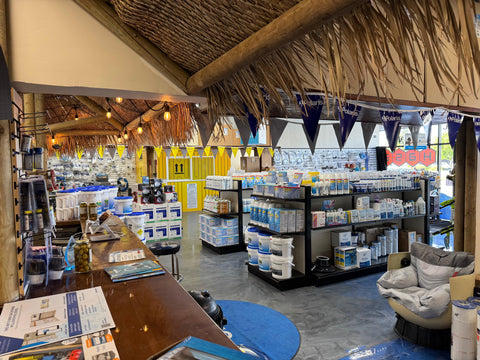
- Local Pool Expertise: Benchmark Pool Supply serves pool owners and professionals from our Fresno and Clovis, California locations.
Frequently Asked Questions About Pool Pumps
What size pool pump do I need?
The correct pump depends on the flow requirements and resistance of the complete pool system—not only pool volume or horsepower. Plumbing size, filter capacity, heater requirements, water features, and total dynamic head should be considered before selecting a pump.
Should I replace my pump with the same horsepower?
Not automatically. Two pumps with the same labeled horsepower can produce different flow rates and have different motor ratings. Compare the full pump model, performance curve, voltage, plumbing connections, and system requirements before choosing a replacement.
Are variable-speed pumps worth the investment?
For many pools, yes. Variable-speed pumps can operate at lower speeds during routine filtration, which can reduce energy consumption and noise. Actual savings depend on the pump size, programming, operating schedule, utility rates, and the flow required by the pool equipment.
How long does a pool pump last?
Pump life varies based on installation quality, operating conditions, maintenance, climate, water exposure, and daily run time. Shaft seals, bearings, capacitors, motors, and other components may require service before the complete pump housing needs replacement.
Can a pool pump be used with a saltwater pool?
Most modern pool pumps can be used with saltwater-chlorine systems when installed and maintained correctly. Confirm the pump manufacturer’s specifications and keep the pool’s water chemistry within the recommended ranges.
What is the difference between a booster pump and a regular pool pump?
The main pool pump circulates water through the filtration and treatment system. A booster pump is a secondary pump that provides additional pressure for certain pressure-side pool cleaners. A booster pump cannot serve as the pool’s primary circulation pump.
Why is my pool pump losing prime?
Common causes include a low pool-water level, clogged basket, damaged pump-lid O-ring, loose drain plug, closed valve, blocked suction line, or air leak in the plumbing before the pump. Continuing to operate a pump that cannot maintain prime can damage the shaft seal and other components.