The Quick Breakdown:
- Sanitizer: Chlorine helps control bacteria and other germs. The amount you need depends in part on whether your pool uses a stabilizer such as cyanuric acid.
- Water Balancers: Products such as muriatic acid, soda ash, and alkalinity increaser help you correct pH and total alkalinity when testing shows they're out of range.
- Stabilizer: Cyanuric acid helps protect chlorine from sunlight in outdoor pools, but too much can make chlorine less effective.
- Other Treatments: Shock, algaecide, and clarifier can help with specific water-care needs, but you shouldn't add them automatically without checking your water first.
If you've ever stood in front of a shelf of chlorine and algaecide and thought, “What chemicals do I need for my pool?”, you're asking the right question. But before you start grabbing every product in sight, test your water first. The results will point you in the right direction.
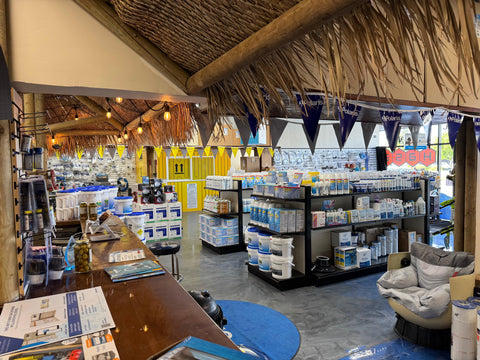
At Benchmark Pool Supply, we help pool owners throughout Fresno and Clovis make sense of their water test results and choose the right products for their pools. In this guide, we'll break down what each pool chemical does, how to balance pool chemicals with your water, and when you may need other treatments.
The Essential Pool Chemicals Every Owner Needs
- Chlorine: Chlorine sanitizes the water and controls bacteria and other contaminants. Tablets are a common option for ongoing maintenance.
- pH Balancers: pH affects swimmer comfort, pool surfaces, equipment, and how well chlorine works. Muriatic acid can lower high pH, while soda ash can raise low pH.
- Total Alkalinity and Calcium Hardness: Total alkalinity helps stabilize pH, while calcium hardness measures dissolved calcium in the water.
- Cyanuric Acid (Stabilizer): Stabilizer helps protect chlorine from sunlight in outdoor pools, but too much can reduce chlorine effectiveness.
- Pool Shock: Pool shock raises free chlorine levels and helps reset your pool's chemistry when contaminants build up, or water conditions change due to severe weather.
- Algaecide and Other Treatments: These products address specific water problems, such as black algae, rather than provide routine maintenance.
How to Balance Your In-Ground Pool Chemicals
Step 1 — Test Your Water First
Check free chlorine, pH, total alkalinity, cyanuric acid, and calcium hardness using test strips or a liquid test kit.
You can also bring a water sample to Benchmark Pool Supply for free in-store testing in Fresno or Clovis. We'll check your levels so you know what needs attention.
Step 2 — Adjust in the Right Order
If the tests show total alkalinity is significantly out of range, address it before fine-tuning pH since alkalinity helps keep pH stable. From there, correct your sanitizer level and any other readings that are out of range.
Dose each product according to your pool volume and its label instructions. Give the treatment the recommended circulation time before testing again.
Pool Chemical Safety: Never mix pool chemicals. Follow the product label for safe handling and application, and only pre-dissolve a chemical when directed.
Step 3 — Shock and Maintain Weekly
Your pool's needs can change with use, weather, and the season. After adjusting, retest as directed and keep checking your water regularly.
What Chemicals Do I Need for an Above Ground Pool?
Above-ground pools use the same basic chemicals as in-ground pools, but water volume and liner type can affect dosage. If you have a vinyl liner, avoid letting concentrated chemicals sit directly on the surface unless the product specifically calls for that application.
Starter Chemical Kit for Above Ground Pools
- Test your sanitizer, pH, total alkalinity, calcium hardness, and stabilizer levels.
- Adjust only the levels that are out of range.
- Measure chemicals based on your pool's water volume and the product directions.
- Let each treatment circulate for the recommended amount of time.
- Retest the water before swimming.

Common Pool Chemical Mistakes to Avoid
- Adding Chemicals Before Testing: Treating based on appearance alone can mean adding chemicals you don't need or pushing another level out of range.
- Ignoring Your Stabilizer Level: Cyanuric acid helps protect chlorine from sunlight, but your stabilizer level still needs attention. Adding more chlorine without checking your CYA level may not solve the problem.
- Using Every Product the Same Way: Application methods, dosage, circulation time, and swimming wait times vary by product. Follow the label rather than relying on one routine for every chemical.
- Treating Cloudy Water Without Finding the Cause: Cloudiness can come from water chemistry, filtration, or other issues. Check the source of the cloudiness before adding a clarifier.
Pool chemistry can be frustrating when you're not sure what to look for. Bring a water sample to Benchmark Pool Supply for free in-store testing, and we'll help you determine what chemicals you need for your pool.
FAQ — Pool Chemicals for Beginners
How Often Should I Add Chemicals to My Pool?
Chlorine needs ongoing maintenance, while pH adjusters, shock, algaecide, and other treatments depend on your test results and water conditions. Regular testing tells you when you need to readjust.
What Order Should I Add Pool Chemicals?
Start with your test results rather than following the same order every time. If total alkalinity is significantly out of range, correct it before fine-tuning pH since alkalinity helps keep pH stable. Then address your sanitizer and other readings as needed, following each product's directions.
Do Above-Ground Pools Need Different Chemicals?
Not usually. Above-ground pools use the same basic chemicals as in-ground pools. Your water volume, liner, equipment, and test results determine what products you need and how much to use.
How Do I Know if My Pool Water Is Balanced?
Test your free chlorine, pH, total alkalinity, cyanuric acid, and calcium hardness. Clear water alone doesn't tell you whether those levels are in range, so use your test results to determine if anything needs adjustment.
What Happens if I Swim in an Unbalanced Pool?
Low sanitizer can leave the water inadequately disinfected, while improper pH can irritate your eyes and skin and affect how well chlorine works. Poor water balance also contributes to scaling, corrosion, or damage to pool surfaces and equipment over time.